


Opening up your eyes in the morning and feeling a gritty, scratchy sensation instead of feeling refreshed can be frustrating. That uncomfortable feeling can make it hard to start your day, and it’s a more common experience than you may think. The team at The Eye Avenue knows it’s not something you have to just live with.
This discomfort often happens because your eyes don’t stay moist enough while you sleep, a problem that can stem from your environment, sleep habits, or tear quality. Our team at The Eye Avenue wants to help you find relief so that you can wake up with clear, comfortable vision.
Common Causes for Morning Dry Eye
When you wake up with that gritty, scratchy feeling, it’s often because your eyes lacked moisture overnight. Several factors can contribute to this discomfort.
Your Sleep Environment
The air in your bedroom can have a big impact on your eye comfort. Low humidity, especially from running an air conditioner or heater, can cause the moisture on the surface of your eyes to evaporate too quickly while you sleep.
Common irritants in your room can also play a role. Things you might not even notice can bother your eyes overnight, including:
- Dust mites
- Pet dander
- Mold
How You Sleep
Sometimes, your eyelids may not fully close while you sleep, a condition known as nocturnal lagophthalmos. Even a small gap leaves the surface of your eye exposed to the air, and this can happen without you knowing. This exposure allows your tear film to dry out, leaving your eyes feeling sore and dry by morning.
Your Tear Film Quality
Healthy tears need a specific balance of water, oil, and mucus to properly lubricate your eyes. If the tiny, oil-producing glands that line your eyelids become blocked, your tears can evaporate too fast. This imbalance can cause dryness, even when your eyes are closed.
Other Health Factors
Certain parts of your daily routine or overall health can also affect tear production. A few common factors include:
- Medications: Some medicines, like antihistamines (allergy medications) or blood pressure drugs, can reduce tear production as a side effect.
- Allergies: Seasonal or year-round allergies can cause inflammation that leads to dryness and irritation.
At-Home Remedies for Relief
You can take simple steps to help your eyes feel more comfortable when you wake up. These adjustments to your routine can often make a noticeable difference.
Adjust Your Bedroom Environment
A few small changes to your bedroom can create a more eye-friendly space. You can try to:
- Use a humidifier to add moisture back into the air overnight.
- Wash your bedding regularly in hot water to reduce allergens.
- Consider an air purifier to filter out dust and other irritants.
Soothe Your Eyes Directly
You can also give your eyes some direct attention before bed or first thing in the morning. Applying a warm compress to your closed eyelids for a few minutes can help unblock oil glands. You can also use preservative-free artificial tears to add moisture right before you go to sleep.
Helpful Lifestyle Habits
Your daytime habits also affect your eye health. Drinking plenty of water throughout the day helps your body stay hydrated, which can support tear production. It also helps to limit screen time before bed, as staring at digital screens can reduce how often you blink.
Professional Treatment Options
If home remedies do not provide enough relief, an eye doctor can recommend more specific treatments.
Prescription Eye Drops
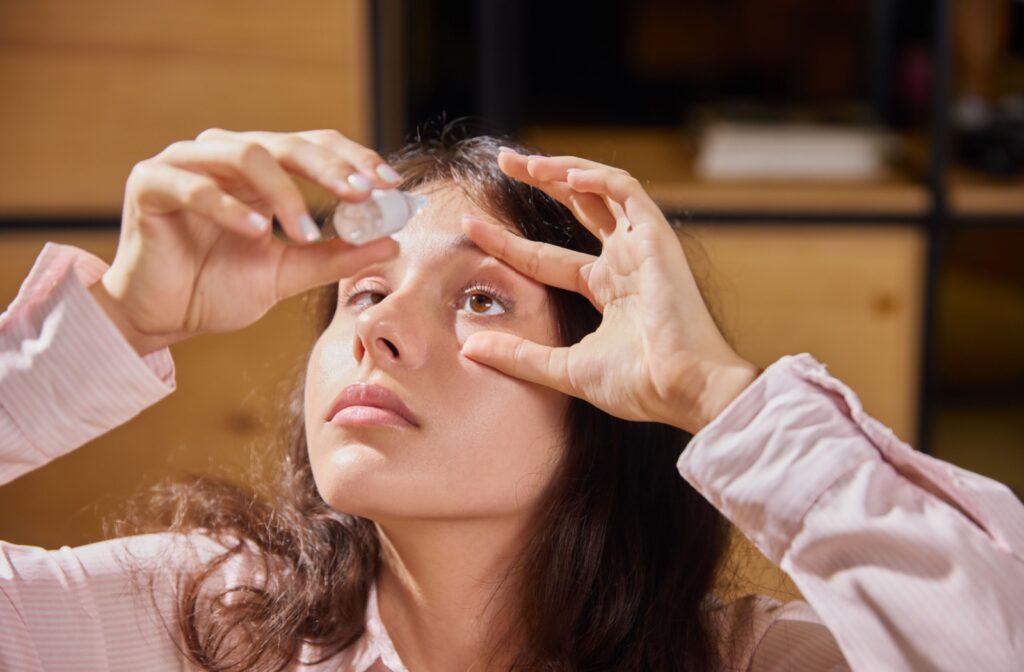
An eye doctor may prescribe specific drops that do more than just add moisture. Some medicated drops can help your eyes produce more of their own natural tears or can help reduce inflammation that contributes to dryness.
In-Office Procedures
For issues like blocked glands, some procedures can provide more lasting relief. A treatment like radiofrequency uses gentle and precise heat energy to encourage proper oil flow from the eyelid glands. Another option involves tiny inserts called punctal plugs, which help your natural tears stay on the surface of your eyes longer.
Therapeutic Contact Lenses
In some cases, an eye doctor might suggest special contact lenses. These lenses act as a protective shield for the surface of the eye, keeping it moist and providing consistent relief from severe dryness.
Could Your Dry Eye Signal Something More?
While often caused by environmental factors, persistent morning dry eye can sometimes be linked to other conditions.
Chronic Eye Conditions
Ongoing dry eye may be related to conditions like meibomian gland dysfunction (MGD), where the eyelid glands are chronically blocked. It could also be a sign of blepharitis, which is a condition that involves eyelid inflammation.
The Role of Nutrition and Health
Your overall health plays a part in your eye wellness. A balanced diet supports all of your body’s functions, including tear production. Certain autoimmune conditions can also contribute to dry eye symptoms, which makes a comprehensive eye exam an important step.
When to See an Eye Doctor
If your symptoms continue for more than a few days or start to get worse, it’s a good idea to schedule an eye exam. A visit with our optometry team can help find the contributing factors and start you on a path to relief.
Symptoms That Need Attention
Pay attention to your symptoms and consider a visit to the eye doctor if you experience:
- Discomfort that does not improve with at-home care
- Eye pain or significant redness
- Blurry vision
- Sensitivity to light
Find a Clear Path to Relief
At The Eye Avenue, the team of eye care professionals can help identify the causes of your morning dry eye and create a personalized plan to help you wake up feeling comfortable. If you’re in the Oviedo area, we’d love to see you. Schedule your appointment today.