


Key Takeaways
- Vitamins A, C, and E are antioxidants that help protect your body’s cells from damage.
- Your body can’t make lutein and zeaxanthin, but leafy greens, peppers, and eggs are natural sources.
- A specific supplement formula may slow age-related macular degeneration (AMD) for some people.
- Some supplements can interact with medicines, and people who smoke or used to smoke should skip beta carotene.
- Your eye doctor can help you decide if a supplement fits your needs.
The Right Vitamins Contribute to Eye Health
You’ve probably stood in the pharmacy aisle, staring at rows of eye vitamins and wondering which ones deserve a spot in your cart. The labels make big promises, and the possible choices can feel endless. Ultimately, the right option depends on your diet, your health, and the results of an eye exam.
Vitamins A, C, and E, along with lutein and zeaxanthin, can all help support eye health. For some people, a specific supplement blend known as AREDS2 may also help slow AMD. Booking an eye exam with Dr. Regina Tran or Dr. John Tran at The Eye Avenue can give you an idea of how your eyes are doing and whether a supplement makes sense for you.
Which Vitamins Help Your Eyes?
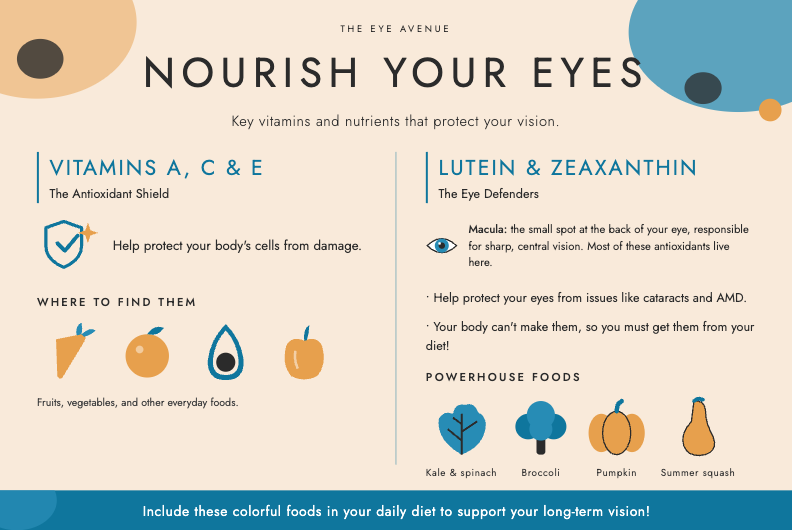
Vitamins A, C, & E
These three vitamins are antioxidants, which means that they help protect your body’s cells from damage. You can get these vitamins from fruits, vegetables, and other everyday foods.
Lutein & Zeaxanthin
Lutein and zeaxanthin are also antioxidants, and they help to protect your eyes from issues like cataracts and AMD. These substances are found mostly in your macula, the small part of the back of your eye that’s responsible for sharp, central vision.
Your body can’t make lutein or zeaxanthin on its own, so it’s helpful to include them in your diet. You can find both substances in dark leafy greens like kale and spinach, sweet red peppers, summer squash, pumpkin, and broccoli, among others.
Can Supplements Help With Dry Eye?
Dry eye is a common condition that occurs when your eyes don’t produce enough tears or when tears evaporate too quickly. Some people may consider taking omega-3 fatty acid supplements, such as fish oil, to help manage dry eye symptoms. Omega-3 fatty acids are also found naturally in foods like salmon, sardines, tuna, and flaxseeds.
Before adding fish oil or another supplement to your routine, talk with your eye doctor. They can evaluate your tear film, identify what’s contributing to your symptoms, and recommend treatment options based on your needs.
Eye Vitamins & Age-Related Macular Degeneration
What Is AMD?
Age-related macular degeneration (AMD) is an age-related eye disease that affects central vision and can cause vision loss. Several factors may play a role, including age, genes, smoking, sunlight, and diet.
What Is in the AREDS2 Formula?
The Age-Related Eye Disease Study 2 (AREDS2) formula is a supplement blend containing vitamin C, vitamin E, zinc, copper, 10 mg of lutein, and 2 mg of zeaxanthin. For some people with AMD, this formula may slow the disease’s progression. However, AREDS2 is designed for people with a specific eye health situation, and we don’t recommend that you take it on your own without your eye doctor’s recommendation.

Who May Benefit from AREDS2?
Your eye doctor may suggest AREDS2 based on the results of an eye exam. Signs that you might be a good fit include:
- You have several medium or large drusen (small yellow deposits under the retina).
- You have wet AMD in one eye and dry AMD in the other.
Your eye doctor will let you know if AREDS2 is a good fit for you.
Which Vitamins & Supplements Shouldn’t Be Mixed?
Vitamins, Supplements, & Medicines
If you take warfarin or aspirin, vitamins E and K may interact with them. High-dose omega-3 supplements may also thin your blood when combined with warfarin.
Before starting supplementation, it’s always helpful to consult a medical professional.
Beta Carotene & Smokers
Beta carotene supplements have been linked to an increased risk of lung cancer in people who smoke or who have a prior history of smoking. Smoking itself may double your risk of AMD, so quitting is a way to protect for your eyes
When to Talk to Eye Doctors in Oviedo About Eye Vitamins
If you’re considering supplements, we recommend that you talk to your optometrist and follow their recommendations. No supplement makes conditions like AMD go away, but the right ones paired with regular checkups can help you keep your eyes healthy.
Book your next eye exam with our team at The Eye Avenue through our online appointment portal, and bring your questions along.