


Myopia, or nearsightedness, keeps faraway things blurry while close-up work stays sharp. It usually turns up during grade school, often at a routine children’s eye exam before anyone notices at home.
For most families, the harder part comes later, when the prescription gets stronger year after year. Myopia worsens as the eyeball keeps growing longer from front to back, and everything from family history to daily screen habits can influence how fast that growth happens.
How Myopia Changes the Shape of the Eye
A nearsighted eye runs longer from front to back than it needs to be, or the cornea is too curved. Light comes in and focuses just short of the retina, the layer at the back of the eye that turns light into the images you see, so anything at a distance lands soft.
Glasses and contacts move that focus back where it belongs, while the eye underneath keeps growing at its own pace. That gap explains why a prescription that worked last fall can feel weak by spring.
Top Factors Affecting Myopia
Family History and Genetics
Genes help decide how a child’s eyes develop, including how long the eyeball ends up. If a parent is nearsighted, their child has a higher chance of becoming nearsighted too. That chance goes up again when both parents wear a distance prescription.
Share your family history at the first visit. Knowing it early lets your optometrist watch for small changes before they add up.
Age and Natural Eye Growth
Eyes grow along with the rest of the body, which is why myopia tends to move fastest during the school years. Onset now commonly begins around ages 6 or 7, earlier than it did a generation ago.
Most people see the changes slow down and settle in their early 20s. Some adults still notice small increases after that, especially with heavy close-up work.
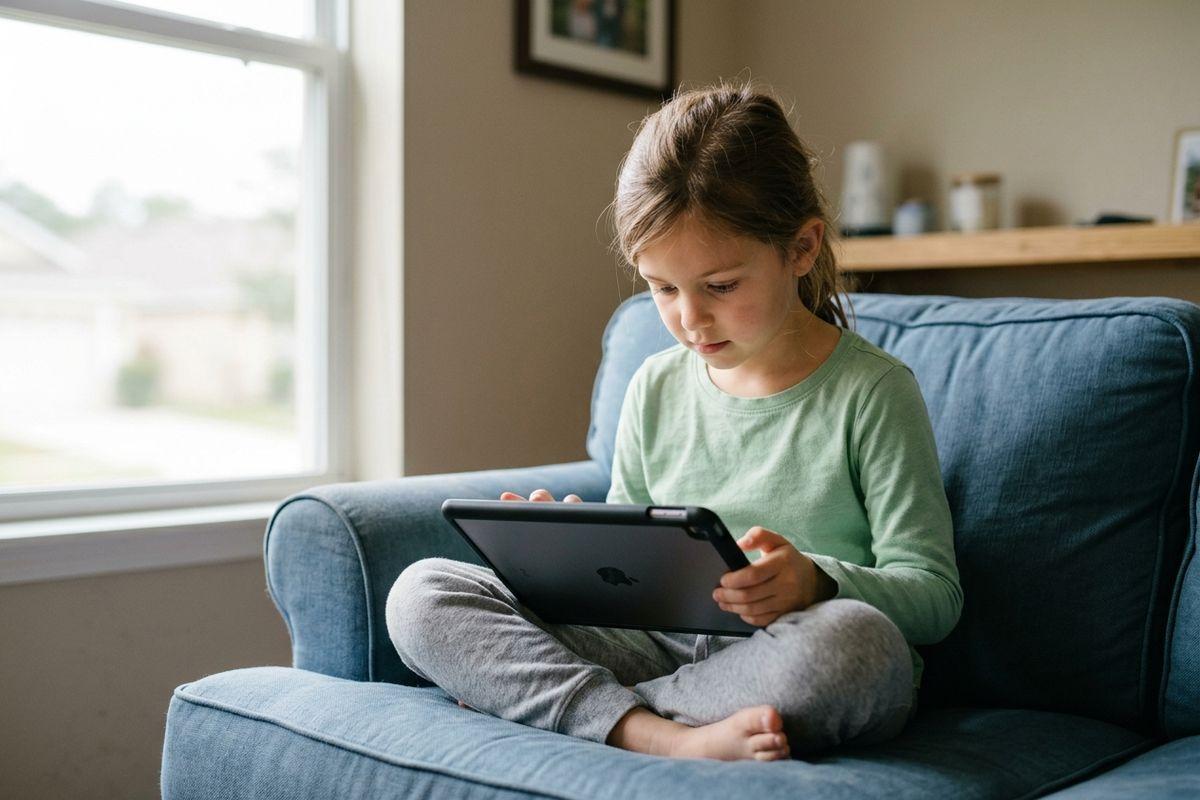
Screen Time and Close-Up Work
Count the hours your child spends focused on something within arm’s reach. Phones, tablets, homework, and craft projects all hold the eyes at a short working distance for long stretches.
Increased near work has been linked to a faster rate of myopia in children. It also leaves eyes tired and achy by the end of the day.
Set a working distance at home and stick with it. Books and screens sit better around elbow length from the face, and glancing across the room every few minutes gives the focusing muscles a rest.
Time Spent Outdoors
Kids who spend most of the day indoors carry a higher risk of myopia. Natural daylight appears to support healthy eye growth in ways indoor lighting can’t match.
Aim for 1 to 2 hours outside every day. A bike ride or an hour at the park counts just as much as organized sports, so let your child pick.
Signs Your Child’s Vision Is Changing
Kids rarely mention blurry vision, since they assume everyone sees the world the way they do. Watch for these habits instead:
- Squinting at the whiteboard or at street signs
- Sitting closer and closer to the TV
- Holding books and tablets right up to the face
- Rubbing their eyes during homework
- Mentioning headaches at the end of a school day
Bring up anything on that list when you book. It gives your optometrist a head start.
Habits That Can Help at Home
Daily routines can take pressure off tired eyes and support whatever plan you build with your optometrist. Try a few of these:
- Follow the 20-20-20 rule by looking at something 20 feet away for 20 seconds every 20 minutes
- Set up homework near a window, where softer daylight can reduce squinting and eyestrain
- Move screen time earlier in the day and outdoor time later, so the evening ends with less near focus
- Keep tablets out of the bedroom
Myopia Control Options to Ask About
Home habits help, and they work best alongside professional care. Your optometrist can walk you through myopia control options that suit your child’s age and how quickly their vision is changing.
A few approaches come up most often:
- Myopia control glasses, which change how light focuses across the whole retina
- MiSight daily contact lenses and other multifocal soft lenses made for kids
- Ortho-K lenses, worn overnight to gently reshape the front of the eye
- Low-dose atropine eye drops, used at bedtime to slow how quickly myopia progresses
Each one comes with its own routine and follow-up schedule, so talk through what fits your family before committing.
Book an Exam Before the Next Prescription Change
Book an eye exam every year and share what you’ve noticed at home. Ask directly about myopia control while you’re here, especially if the prescription has climbed rapidly twice in a row.
At The Eye Avenue, our team gets to know your whole family before recommending anything. Schedule an eye exam and give your child’s vision the attention it needs while their eyes are still growing.